This will be an atypical post, as I’m not going to talk about music. I’m going to talk about video games. And music (ha).
I probably haven’t mentioned this before, but I’m a point-and-click adventure enthusiast. Most people I know are not familiar with this type of game, so I rarely speak about it. To make a long story short, they are based on solving puzzles, talking to other characters to gather valuable clues, examining locations, and finding objects to combine and use to advance the story. It’s very much like an interactive movie. It appeals to me because it’s more brain-oriented than action-based (as you can imagine from the name “point-and-click”). Usually, they are also pretty humorous, though it depends on the story; some are deeper than others. The graphics are highly creative, ranging from old-school pixel art to 2D cartoonish backgrounds and 3D design.
A true milestone in the adventure gaming world, and the very first point-and-click I ever played (on floppy disks, no less, using an Amiga 500 computer), is The Secret of Monkey Island (1990) by Lucasfilm Games. If you haven’t played it—well, I can’t recommend it enough. I’m going to quote Wikipedia for some basic info about the game:
The Secret of Monkey Island is a 1990 point-and-click graphic adventure game developed and published by Lucasfilm Games. It takes place in a fictional version of the Caribbean during the age of piracy. The player assumes the role of Guybrush Threepwood, a young man who dreams of becoming a pirate, and explores fictional islands while solving puzzles.
The game was conceived in 1988 by Lucasfilm employee Ron Gilbert, who designed it with Tim Schafer and Dave Grossman. Gilbert’s frustrations with contemporary adventure titles led him to make the player character‘s death almost impossible, which meant that gameplay focused on exploration. The atmosphere was based on that of the Pirates of the Caribbean theme park ride. The Secret of Monkey Island was the fifth game built with the SCUMM engine, which was heavily modified to include a more user-friendly interface.
Critics praised The Secret of Monkey Island for its humor, audiovisuals, and gameplay. Several publications list it among the greatest video games of all time. The game spawned a number of sequels, collectively known as the Monkey Island series. Gilbert, Schafer and Grossman also led the development of the sequel Monkey Island 2: LeChuck’s Revenge. LucasArts released a remake of the original in 2009, which was also well received by the gaming press.
Why am I writing about this? Because I’m very excited about the announcement of a new Monkey Island installment to be released later this year, helmed by original creator Ron Gilbert. Ron worked on the first two titles, and while other games followed (3, 4, and 5) that were enjoyable and entertaining, Ron and the original team—including Dave Grossman, Tim Schafer, and artist Steve Purcell—were not involved. I really missed their touch. From the third game onward, Gilbert’s cryptic, surreal sense of humor was overshadowed by parody; everything became a bit too safe, losing that grotesque edge I had grown used to. Just my two cents, of course—some gamers are very passionate about this topic, sometimes a bit too much! That being said, I still think every game in the series is worth playing, if only to experience how different talented designers have approached the Monkey Island saga.
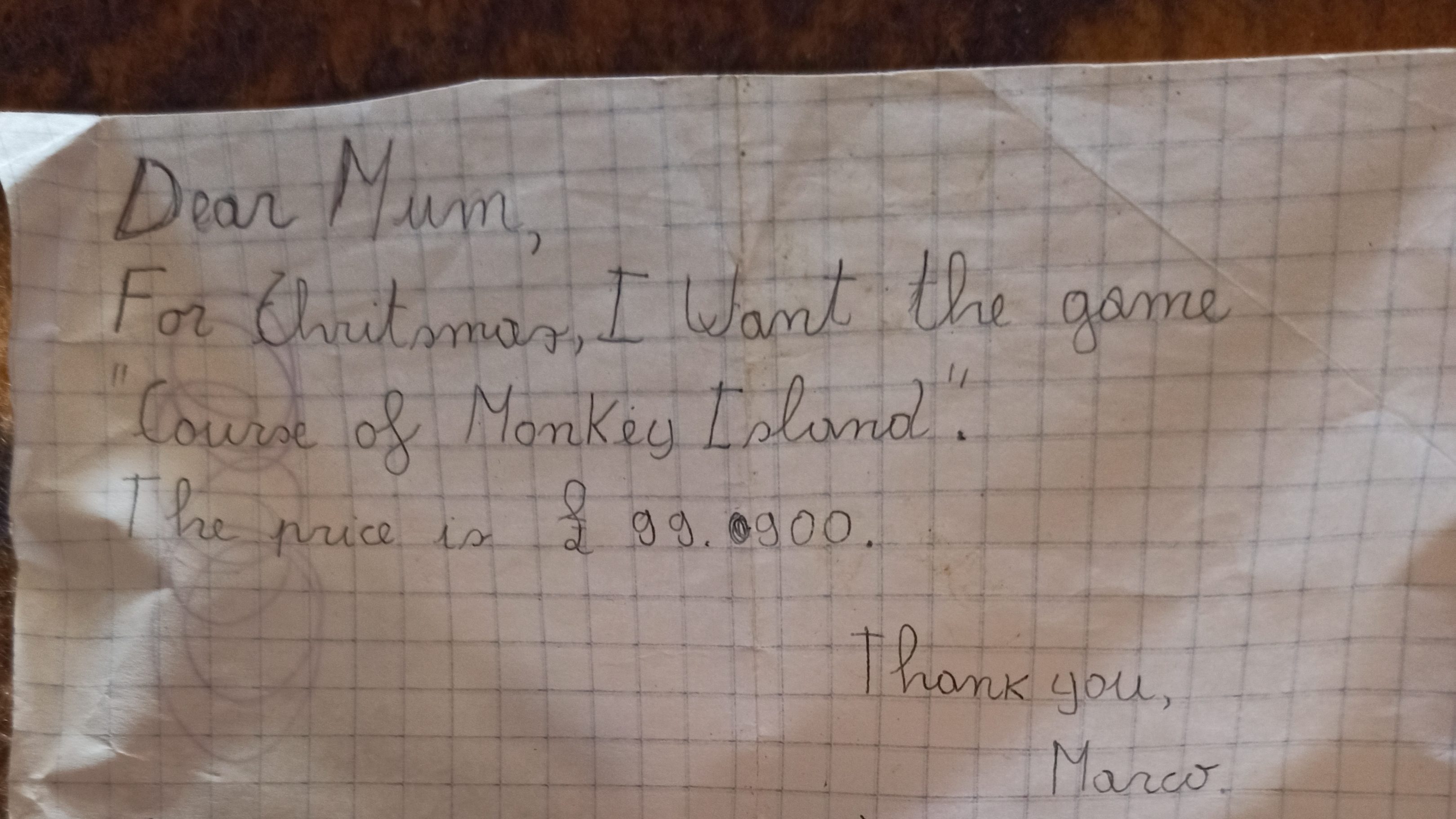
What I find fascinating about Ron Gilbert is the unique, inventive approach that comes across in everything he does. He maintains a blog called Grumpy Gamer, where he famously announced a new Monkey Island. The funny thing is, he casually dropped the announcement on April Fools’ Day:
For 18 years the Grumpy Gamer blog has been April Fools’ day-free because it’s a stupid tradition.
So to mix things up a little I’m taking this opportunity to announce I’ve decided to make another Monkey Island.
A lot of confusion ensued. Personally, I suspected it was true—after all, he used to write an April Fools’ post every year, always stating that his blog was April Fools’-free. It all made sense. In his own words, “the announcement was a joke 18 years in the making.” A few days later, a short teaser appeared everywhere, confirming the news and cementing the hype. I don’t know what to expect, really, but I’m sure it will be good. In case you’re interested, you can read a recent, comprehensive interview with Ron and co-writer Dave Grossman about Return to Monkey Island at this link. It provides a lot of much-needed context.
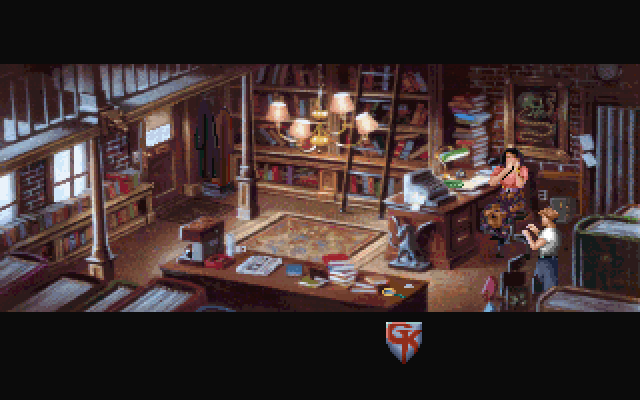
But it’s not just Monkey Island. Sierra On-Line’s Gabriel Knight is another graphic adventure that I love (the first installment of the series came out in 1993), and I highly recommend it too. It features an enthralling, well-researched story (written by author Jane Jensen), memorable characters, and engaging gameplay. A few days ago, I had the pleasure of interviewing Robert Holmes, the composer behind the timeless music of the game. We had a very enjoyable chat (and found out we have mutual friends in Seattle); Robert shared lots of insights about scoring the series, current and future projects, and much more. Here’s the video:
All in all, I think my favorite Gabriel Knight game is the third one in the series. Quite an unpopular opinion, it seems—the game is infamous for an obscure enigma known as the Cat hair moustache puzzle, regarded by many as the worst puzzle ever created for a point-and-click adventure (though I honestly think there are worse ones out there). The 3D graphics haven’t aged too well—it came out at a time when adventures had to be done in 3D to reach a broader audience—but the UI and gameplay were absolutely innovative. It strikes me as very odd that those innovations have been so thoroughly ignored. I used to spend hours roaming the streets of Rennes-le-Château, soaking up the calm, relaxed atmosphere of the small French town and immersing myself in the exquisite sound design. I highly suggest you listen to Robert’s Grace’s Theme—a beautiful piece of music.
Anyway, there is so much more to say and many more games to discuss, but I’m going to end this post here. Let me know if you give any of these a try, or if you were already familiar with them. I’m always happy to talk about point-and-click graphic adventures!
Ciao.


Hey Marco — good to hear from you!
My gaming days were back in the 90s, starting with Myst, Riven, and variety of other games in that then-new genre. Like you, I enjoyed these much more than bang-bang-shoot’m-up games.
So why did my gaming days end in the early 2000s, you ask? Because I found another hobby that I liked better: playing bass!
Ciao, Lee
____________________________________
Lee A. Kirkpatrick Professor, Dept. of Psychological Sciences William & Mary Williamsburg, VA 23187-8795 (757) 221-3997 ________________________________
"Mi piace"Piace a 1 persona